
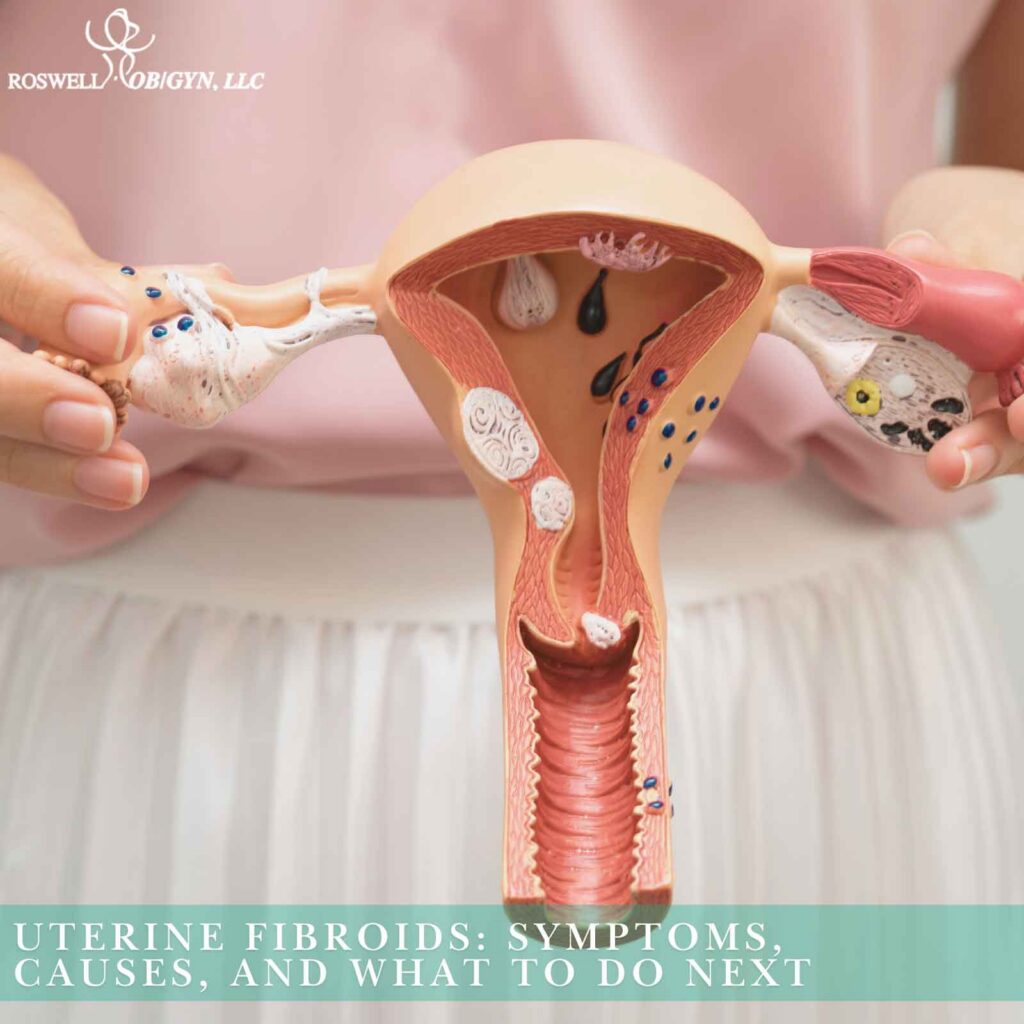
Uterine fibroids are non-cancerous growths that develop in or on the uterus, and they are one of the most common gynecologic conditions affecting women of reproductive age. Many women have fibroids without knowing it, while others experience symptoms that interfere with daily life, menstrual health, and reproductive goals. Understanding what fibroids are, what causes them, and when to seek evaluation gives patients the information they need to make confident decisions about their care.
What Are Uterine Fibroids?
Uterine fibroids, also called leiomyomas or myomas, are benign growths made of smooth muscle and fibrous tissue. They develop within the uterine wall, on its outer surface, or just beneath the inner lining, and they can range in size from a small seedling to a growth large enough to alter the shape of the uterus. An OBGYN typically identifies fibroids through pelvic examination or imaging, often during a routine visit before symptoms become noticeable.
Fibroids are classified by their location within or around the uterus: intramural fibroids grow within the muscular wall, subserosal fibroids develop on the outer surface, and submucosal fibroids form just beneath the endometrial lining and extend into the uterine cavity. Each type carries a distinct symptom profile, which is why accurate classification at an OBGYN clinic is the starting point for any treatment discussion. A submucosal fibroid the size of a marble can cause heavier bleeding than a subserosal fibroid many times its size, simply because of where it sits, which is why location, not size alone, drives clinical decision-making.
Common Symptoms of Uterine Fibroids
Fibroid symptoms vary widely depending on the number, size, and location of the growths. Some women experience no symptoms at all, while others deal with significant disruption to their menstrual cycle, pelvic comfort, and quality of life. OBGYN specialists look at the full clinical picture, including symptom history and imaging findings, before drawing any conclusions about what treatment, if any, is appropriate.
Menstrual and Bleeding Symptoms
Heavy or prolonged menstrual bleeding is the most commonly reported symptom of uterine fibroids, particularly in women with submucosal fibroids that affect the uterine lining. Periods may last longer than seven days, require frequent pad or tampon changes, or involve the passage of blood clots. Over time, chronic heavy bleeding can lead to iron-deficiency anemia, which presents as fatigue, shortness of breath, and difficulty with daily activity.
Spotting between periods, irregular cycle patterns, and unpredictable bleeding are also possible, especially when fibroids are positioned in a way that directly disrupts how the uterine lining sheds. A provider at an OBGYN clinic will evaluate these patterns alongside imaging results to determine the type and extent of fibroid involvement before recommending next steps.
Pelvic Pain and Pressure Symptoms
Fibroids that grow on the outer surface of the uterus or within its muscular wall can produce a persistent sense of pressure, heaviness, or fullness in the lower abdomen. This discomfort may intensify during menstruation or physical activity, and some patients describe a dull, constant ache in the lower back or pelvic region that does not resolve between cycles.
When fibroids grow large enough to press against neighboring structures, they can cause bladder compression that leads to frequent or urgent urination, or bowel pressure that results in constipation and discomfort. Pelvic pain caused by fibroids can resemble symptoms of endometriosis, ovarian cysts, or other gynecologic conditions, which is why a clinical evaluation is more reliable than symptom patterns alone. The severity of discomfort does not always correspond to fibroid size, and small fibroids in certain positions can be more symptomatic than larger ones, making imaging and provider assessment more informative than the degree of pain a patient reports.
Reproductive and Fertility-Related Symptoms
Uterine fibroids can affect fertility and pregnancy outcomes, particularly when they are submucosal and distort the uterine cavity. This positioning interferes with implantation, reduces blood flow to the endometrial lining, and increases the risk of early pregnancy loss. Women experiencing difficulty conceiving after six to twelve months of trying, or those with a history of recurrent miscarriage, should discuss fibroid evaluation as part of their overall workup.
During an established pregnancy, large intramural or submucosal fibroids may contribute to preterm labor, abnormal fetal positioning, or placental complications depending on where they are located relative to the placenta and birth canal. OBGYN care that accounts for fibroid status early in a pregnancy allows providers to monitor these risks and adjust the care plan accordingly.
ALSO READ: Fibroids and Fertility: What to Expect
What Causes Uterine Fibroids?
The precise cause of uterine fibroids is not fully understood, but research consistently points to hormonal and genetic factors as the primary drivers. Estrogen and progesterone, the two hormones that regulate the menstrual cycle, appear to stimulate fibroid growth, which is why fibroids typically develop during reproductive years and shrink after menopause when hormone levels decline. OBGYN specialists also recognize that fibroids tend to run in families, suggesting a genetic component in how and why they develop.
Hormonal Influences
Fibroids contain more estrogen and progesterone receptors than normal uterine muscle tissue, which makes them more sensitive to hormonal fluctuations. During reproductive years, rising estrogen levels during the menstrual cycle can stimulate fibroid cell growth, while periods of hormonal suppression, such as those achieved through certain medications, tend to reduce fibroid size. Pregnancy, which brings sustained high estrogen exposure, can also cause fibroids to grow more rapidly in some patients.
This hormonal sensitivity is why OBGYN care for fibroids often begins with an assessment of a patient’s hormonal profile alongside imaging results. Understanding how hormone levels interact with fibroid behavior helps providers determine the most appropriate course of action for each individual patient, whether that is medical management, watchful waiting, or surgical intervention.
Genetic and Other Contributing Factors
Women with a first-degree relative who has had fibroids are at significantly higher risk of developing them. Beyond genetics, several other factors are associated with increased fibroid prevalence:
- Age: Fibroids are most common in women in their 30s and 40s and become less common after menopause
- Race: Research consistently shows that Black women develop fibroids at higher rates, experience them at younger ages, and tend to have more severe symptoms than women of other racial backgrounds
- Body weight: Higher body weight is associated with greater estrogen exposure through adipose tissue, which may promote fibroid growth
- Diet and lifestyle: Some research suggests that diets low in fruits and vegetables and high in red meat may be associated with higher fibroid risk, though findings are not definitive
- Early onset of menstruation: Beginning menstruation before age 10 has been associated with a modestly higher risk
None of these factors guarantees that fibroids will develop, but they inform how OBGYN providers approach screening and monitoring for patients who carry multiple risk factors.
ALSO READ: Robotic Myomectomy: Benefits of Robot-Assisted Surgery for Health Outcomes
How Uterine Fibroids Are Diagnosed and Treated
Fibroids are most often identified through pelvic ultrasound, which remains the first-line imaging tool used at an OBGYN clinic to assess fibroid size, number, and location. When more detail is needed, a sonohysterogram or MRI may be ordered to map the fibroids more precisely relative to the uterine cavity and surrounding structures. The treatment approach depends entirely on the patient’s symptoms, reproductive goals, fibroid characteristics, and preferences.
| Treatment Type | Best Suited For | Key Considerations |
| Watchful waiting | Asymptomatic or mildly symptomatic fibroids | Regular monitoring, no intervention unless symptoms worsen |
| Hormonal medication | Managing bleeding and pain | Reduces symptoms but does not eliminate fibroids permanently |
| Myomectomy | Patients who want to preserve fertility | Removes fibroids while keeping the uterus intact |
| Minimally invasive procedures | Moderate to severe symptoms | Includes laparoscopic or robotic approaches depending on fibroid type |
| Hysterectomy | Completed childbearing with severe symptoms | Definitive treatment; eliminates recurrence |
For women who want to preserve reproductive options, myomectomy is the standard surgical approach. The specific technique used, hysteroscopic for submucosal fibroids or laparoscopic and robotic for intramural and subserosal types, is determined by where the fibroid is located and how it relates to the uterine cavity. Not every fibroid requires surgical removal. Smaller fibroids that are not affecting quality of life or fertility are frequently managed through monitoring alone, with intervention introduced only if symptoms develop or worsen over time. OBGYN specialists tailor every recommendation to the individual patient rather than applying a standard protocol, which means two patients with fibroids of similar size may be on entirely different management paths depending on their symptoms, age, and reproductive plans.
When to Seek an Evaluation
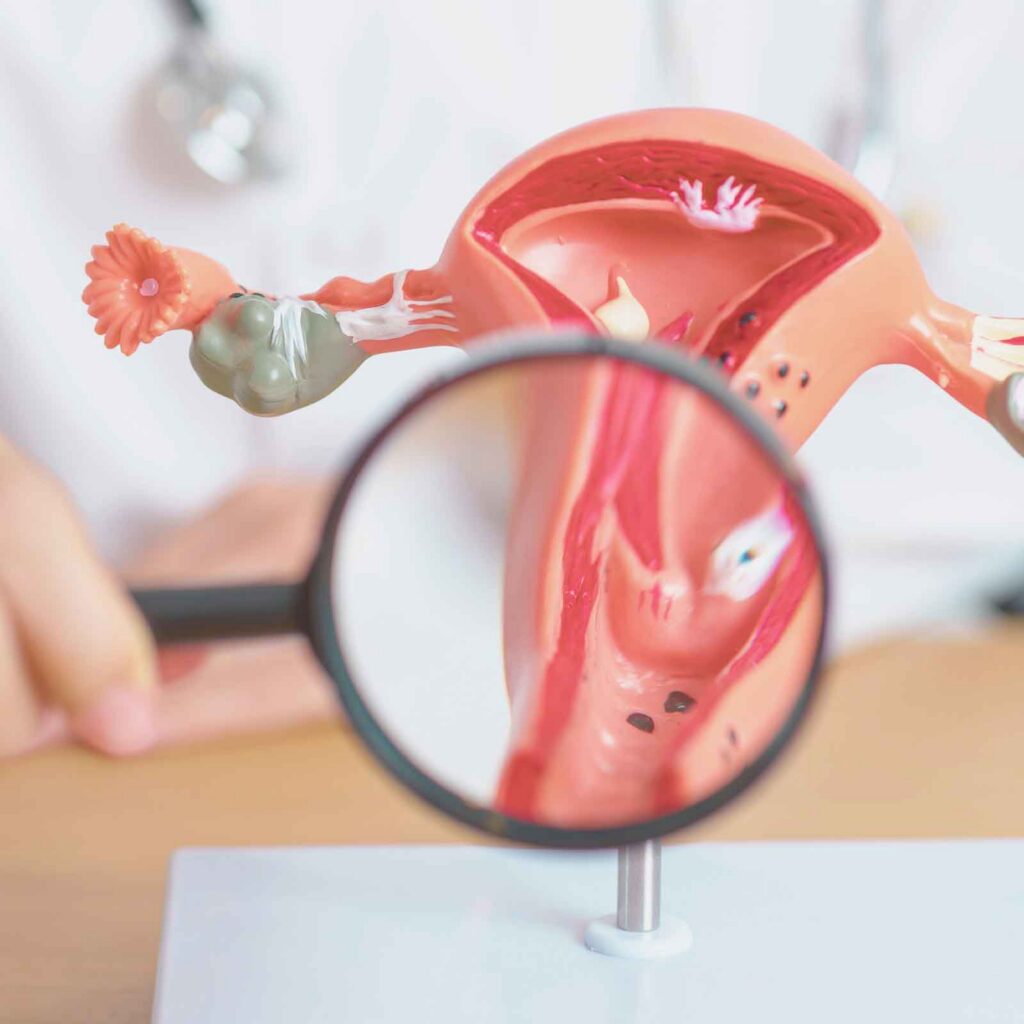
Many women wait longer than necessary before discussing fibroid symptoms with a provider, often because heavy periods or pelvic discomfort have become normalized over time. A consultation is worth scheduling if any of the following apply:
- Menstrual periods lasting longer than seven days or requiring a pad or tampon change every hour or less
- Pelvic pain, pressure, or bloating that persists between cycles
- Frequent urination not associated with a urinary tract infection
- Difficulty conceiving after six to twelve months of trying
- A history of two or more pregnancy losses
- Fatigue or shortness of breath that may point to anemia from heavy bleeding
Fibroids are not always symptomatic, and not every fibroid requires treatment. What matters is having an accurate picture of what is happening so that decisions about monitoring or intervention are based on real clinical information rather than guesswork. The earlier a fibroid is identified and classified by type and location, the wider the range of management options available, and the more time a patient and provider have to plan an approach that fits her health goals.
It is also worth noting that fibroid management is not a one-time decision. Fibroids can change in size and behavior over time, particularly during periods of hormonal shift like perimenopause. A patient who was told years ago that her fibroids did not require treatment may benefit from a re-evaluation if her symptoms have changed, if she is now planning a pregnancy, or if imaging has not been updated recently. Staying connected with an OBGYN clinic through regular visits supports ongoing awareness and the ability to respond to changes before they become significant problems.
Roswell Ob/Gyn, LLC offers gynecological evaluations, fibroid treatment including myomectomy, and infertility support across locations in Alpharetta, Atlanta, Canton, and Cumming, Georgia. Schedule an appointment to speak with one of our providers about your symptoms and what your next steps should include.