
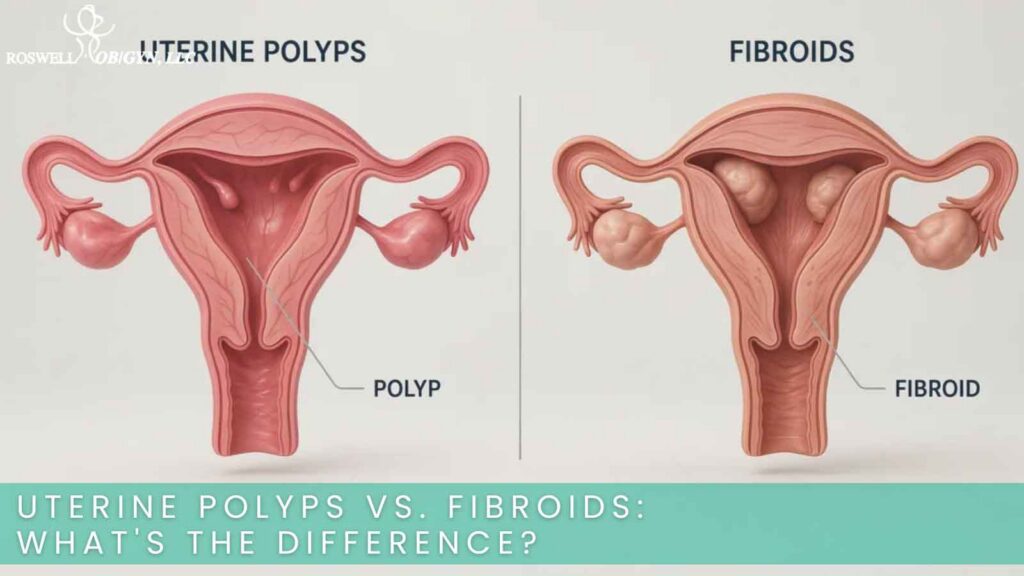
Uterine polyps and uterine fibroids are both common, noncancerous growths inside the uterus, and they often cause overlapping symptoms like abnormal bleeding or pelvic discomfort. The difference is what they are made of and how they behave. Polyps are soft overgrowths of the uterine lining (the endometrium) and most often cause unpredictable spotting or bleeding between periods. Fibroids are dense, muscular tumors that grow in or around the wall of the uterus and tend to cause heavy, prolonged periods, cramping, and pelvic pressure. Telling the two apart matters because the testing, treatment, and follow-up are different for each. Our team treats both as part of our gynecological services, and this guide breaks down what to expect from diagnosis to treatment.
What Are Uterine Polyps?
A uterine polyp, also called an endometrial polyp, is a soft growth made of the same tissue that lines the uterus and sheds during a period. Polyps are usually attached to the uterine wall by a thin stalk and can be as small as a sesame seed or as large as a golf ball. Most women have one polyp at a time, but some develop several.
Polyps are most common in women in their 40s and 50s, especially during perimenopause and after menopause. Hormonal shifts, particularly higher estrogen levels, are thought to play a role in their growth. Risk factors include obesity, high blood pressure, hormone replacement therapy, and the use of tamoxifen for breast cancer treatment.
Most polyps are benign. A small percentage can be precancerous or contain cancer cells, and that risk goes up slightly after menopause, which is one of the main reasons providers recommend evaluating any postmenopausal bleeding promptly.
What Are Uterine Fibroids?
A uterine fibroid, also called a leiomyoma or myoma, is a firm growth made of smooth muscle cells and fibrous connective tissue. Fibroids range from microscopic to bulky masses that can stretch the uterus to the size of a watermelon. A patient may have a single fibroid or many at once, and they are classified by where they grow:
- Submucosal fibroids push into the uterine cavity and often cause the heaviest bleeding
- Intramural fibroids grow inside the muscular wall of the uterus
- Subserosal fibroids grow on the outer surface and can press on nearby organs
- Pedunculated fibroids hang from a stalk inside or outside the uterus
Fibroids most often develop during the childbearing years, between the late 20s and 40s, and tend to shrink after menopause when estrogen drops. They are very common, with up to 70 to 80 percent of women developing at least one by age 50, although many never cause symptoms. The cancer risk for fibroids is extremely low, far lower than for polyps.
ALSO READ: Types of Fibroids: Submucosal, Subserosal, and Intramural Explained
Uterine Polyps vs. Fibroids: Quick Comparison
Both conditions involve growths in the uterus, but they differ in composition, typical symptoms, and treatment. The table below summarizes the key differences side by side and gives you a quick reference for your conversation with your provider.
| Feature | Uterine Polyps | Uterine Fibroids |
| What they are made of | Endometrial (uterine lining) tissue | Smooth muscle and fibrous tissue |
| Texture | Soft | Firm |
| Typical size | Few millimeters to a golf ball | Pea-sized to grapefruit or larger |
| Most common age | 40s and 50s, perimenopausal and postmenopausal | 30s and 40s, childbearing years |
| Typical symptoms | Irregular spotting, bleeding between periods, postmenopausal bleeding | Heavy and prolonged periods, cramping, pelvic pressure, bloating, frequent urination |
| Effect on fertility | Can interfere with implantation | Can interfere depending on location and size |
| Cancer risk | Small percentage may be precancerous | Very rare (less than 1 in 1,000) |
| Common treatment | Hysteroscopic polypectomy | Medication, myomectomy, embolization, or hysterectomy |
How Symptoms Differ Between Polyps and Fibroids
Both uterine polyps and fibroids can cause abnormal uterine bleeding, which is why they are often confused. The pattern of bleeding usually gives the first clue.
Polyps typically cause:
- Spotting or light bleeding between periods
- Unpredictable, irregular cycles
- Bleeding after intercourse
- Bleeding after menopause
- Mild cramping in some cases
Fibroids typically cause:
- Heavy menstrual bleeding that soaks through pads or tampons in an hour
- Periods lasting longer than seven days
- Severe menstrual cramps
- Pelvic pressure, fullness, or a feeling of a low abdominal mass
- Bloating or a visibly larger abdomen
- Frequent urination or constipation from pressure on the bladder or bowel
- Pain during intercourse
- Lower back pain
Both conditions can also contribute to infertility or recurrent pregnancy loss, depending on size and location. If you have noticed any combination of these symptoms, especially heavy bleeding lasting more than a few cycles or bleeding after menopause, that is the right time to schedule an evaluation.
ALSO READ: Uterine Fibroids: Symptoms, Causes, and What to Do Next
How Are Uterine Polyps and Fibroids Diagnosed?
Because polyps and fibroids share symptoms, accurate diagnosis depends on imaging. Your provider will start with a medical history, a pelvic exam, and one or more of the following tests:
- Transvaginal ultrasound. A small probe is placed in the vagina to capture detailed images of the uterus. This is usually the first imaging step and works well for finding fibroids and most polyps. You can read more about our in-office ultrasound services.
- Saline infusion sonogram (SIS) or sonohysterogram. A small amount of sterile fluid is placed in the uterus during ultrasound to outline the cavity. This makes polyps and submucosal fibroids much easier to see.
- Hysteroscopy. A thin camera is inserted through the cervix to look directly inside the uterus. Polyps and small fibroids can sometimes be removed during the same procedure.
- MRI. Used in select cases for mapping large or complex fibroids before surgery.
- Endometrial biopsy. A small tissue sample is taken to rule out precancerous or cancerous changes, especially when there is postmenopausal bleeding.
The right combination of tests depends on your symptoms, age, and risk factors. Your provider will explain which steps make sense for you and what each test involves.
How Are Uterine Polyps Treated?
Treatment for uterine polyps depends on your symptoms, age, fertility goals, and any concerning features on imaging. Common options include:
- Watchful waiting. Small, symptom-free polyps in premenopausal women sometimes resolve on their own and may simply be monitored.
- Hysteroscopic polypectomy. A thin scope is passed through the cervix and the polyp is removed in an outpatient procedure that usually takes less than 30 minutes. Most women go home the same day.
- Hormonal medication. May be used short term to control bleeding, although it does not remove the polyp itself.
- Biopsy of removed tissue. Any tissue removed is sent to pathology to confirm it is not precancerous or cancerous.
Polypectomy is the most common treatment because it is minimally invasive, has a quick recovery, and often resolves symptoms completely.
ALSO READ: Ovarian Cysts: Symptoms, Types, and When to Worry
How Are Uterine Fibroids Treated?
Treatment for uterine fibroids is more variable because fibroids can range from tiny and silent to large and symptomatic. Options include:
- Watchful waiting. Small, asymptomatic fibroids often need no treatment beyond yearly monitoring.
- Medications. Hormonal birth control, GnRH agonists, and tranexamic acid can manage heavy bleeding and reduce fibroid size temporarily.
- Myomectomy. Surgical removal of fibroids while preserving the uterus, available as hysteroscopic, laparoscopic, or open procedures depending on size and location. Preferred for patients who want to maintain fertility.
- Endometrial ablation. Useful when bleeding is the main problem and fertility is not a priority. Learn more about endometrial ablation.
- Uterine fibroid embolization (UFE). A radiology procedure that cuts off blood supply to the fibroid, causing it to shrink.
- Hysterectomy. Surgical removal of the uterus, considered for severe symptoms when other options have failed or are not appropriate.
The right choice depends on your age, fertility plans, fibroid size and location, and how severely symptoms affect your daily life. A thorough conversation with your provider helps match the treatment to the goal.
When Should You See a Provider About Polyps or Fibroids?
You should book an appointment with your OBGYN if you experience any of the following:
- Periods that last longer than seven days or soak through protection in under an hour
- Bleeding or spotting between periods
- Any bleeding after menopause
- Pelvic pain, pressure, or a feeling of fullness
- Difficulty getting pregnant after six to twelve months of trying
- Recurrent miscarriage
- Severe cramping not relieved by over-the-counter medication
Early evaluation gives you more treatment options and rules out the rare but important causes of abnormal bleeding, including precancer and cancer.
Schedule Your Consultation at Roswell Ob/Gyn, LLC
Abnormal bleeding, pelvic pressure, and unexplained changes in your cycle deserve a clear answer, not guesswork. The team at Roswell Ob/Gyn, LLC evaluates both uterine polyps and uterine fibroids with in-office ultrasound, saline infusion sonography, and hysteroscopy, and we offer the full range of treatments including medication, endometrial ablation, and myomectomy across our Alpharetta, Atlanta, Canton, and Cumming locations. You will work with a provider who will take the time to explain your diagnosis, walk you through every option, and build a plan that fits your symptoms, fertility goals, and lifestyle.
Ready for answers? Request your appointment online or call our office today to schedule your evaluation, get a second opinion on a recent diagnosis, or talk through your symptoms with a team you can trust.
Frequently Asked Questions
Can uterine polyps turn into cancer?
Most uterine polyps are benign, but a small percentage can be precancerous or cancerous, especially in postmenopausal women. That is why providers usually recommend removal and biopsy of polyps in postmenopausal patients, and removal of symptomatic polyps in premenopausal patients.
Do fibroids ever go away on their own?
Fibroids rarely disappear in younger women, but they often shrink after menopause as estrogen drops. Some women find that fibroid symptoms ease significantly once they reach their early 50s. During the childbearing years, fibroids tend to grow slowly or stay stable.
Can I get pregnant if I have polyps or fibroids?
Yes, many women conceive without difficulty even with polyps or fibroids present. Each condition can affect fertility depending on size and location, particularly when growths distort the uterine cavity. Your provider can evaluate the impact and recommend treatment if it is interfering with conception or pregnancy.
How can I tell if I have a polyp or a fibroid?
You cannot tell from symptoms alone because both can cause abnormal bleeding and pelvic discomfort. A transvaginal ultrasound, saline infusion sonogram, or hysteroscopy is the only reliable way to distinguish between a uterine polyp and a fibroid. Your provider will order the right test based on your symptoms.
Is removing a polyp or fibroid a major surgery?
Most polyps are removed through a hysteroscopic procedure that is minimally invasive and typically performed as outpatient surgery. Fibroid treatment ranges widely, from in-office procedures to larger operations, depending on size, number, and location. Your provider will walk you through what is involved in your specific situation.