
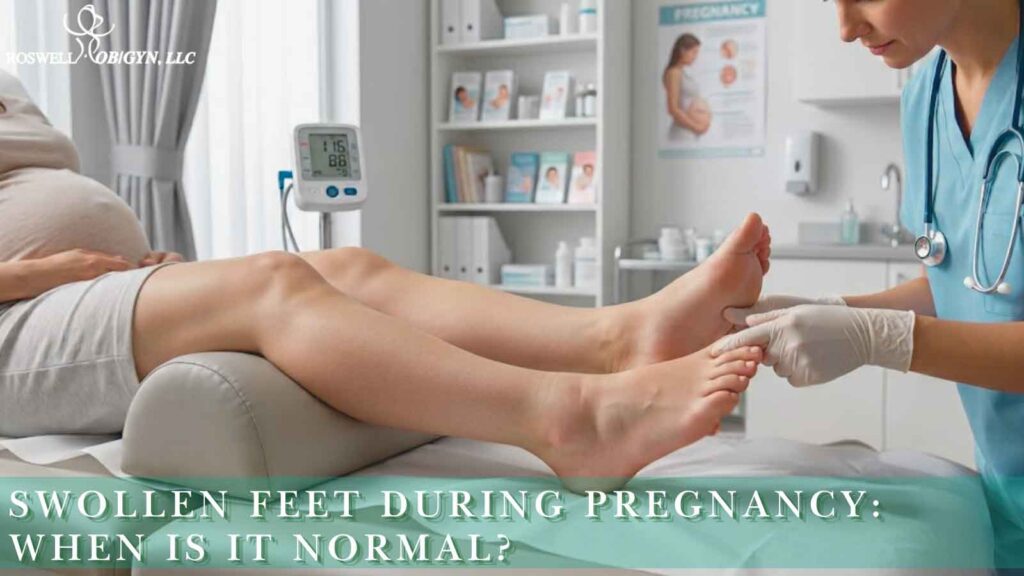
Mild swelling of the feet during pregnancy is normal and very common, especially in the second half of pregnancy. The medical term is edema, and it happens because your body produces about 50 percent more blood and fluid to support the baby, while your growing uterus puts pressure on the veins that return blood from your legs. The result is a slow buildup of fluid in the feet, ankles, and sometimes hands that gets worse as the day goes on and improves after a night of rest. Most of the time it is uncomfortable but harmless. Some patterns of swelling, though, can signal preeclampsia, a blood clot, or another complication that needs prompt care. Our team supports patients across routine prenatal care, and this guide walks through what is normal, what eases discomfort, and exactly when to call your provider.
Why Do Your Feet Swell During Pregnancy?
Pregnancy changes nearly every system in your body, and several of those changes lead to swollen feet. The main contributors include:
- Increased blood and fluid volume. Your blood volume rises by 30 to 50 percent during pregnancy to support the baby. The extra fluid has to go somewhere, and gravity pulls a lot of it into your lower legs.
- Pressure from the growing uterus. As your uterus expands, it presses on the inferior vena cava, the large vein that returns blood from the legs to the heart. That pressure slows blood flow and allows fluid to pool in the feet.
- Hormone shifts. Progesterone and other hormones soften and relax blood vessel walls, which makes it easier for fluid to leak into surrounding tissue.
- Sodium and water balance changes. Pregnancy alters the way kidneys handle sodium and water, leading to more fluid retention.
- Standing and heat. Long periods of standing, hot weather, and humidity all worsen swelling.
Swelling usually shows up around 22 to 27 weeks and peaks in the third trimester. Many women notice their shoes feel tight by late afternoon and looser again in the morning.
When Is Swelling During Pregnancy Normal?
Normal pregnancy edema has a predictable pattern. You can usually expect:
- Gradual onset. Swelling builds slowly over days or weeks, not overnight
- Symmetry. Both feet and ankles swell about the same amount
- End-of-day worsening. Feet feel more swollen by evening and better in the morning
- Improvement with rest. Lying down, putting your feet up, or sleeping eases the swelling
- Mild to moderate level. The skin still looks normal in color, with no significant redness, warmth, or sharp pain
- No other symptoms. No headache, no vision changes, no chest pain, no abdominal pain
If your swelling fits this description, it is almost certainly part of typical pregnancy and not a cause for concern. Mention it at your routine prenatal visits so your provider can keep an eye on it.
ALSO READ: Pregnancy Weight Gain: How Much Is Normal by Trimester?
How to Relieve Swollen Feet During Pregnancy
A few simple habits make a real difference in everyday comfort. Most of these are safe in any pregnancy and can be combined for better results.
- Elevate your feet above heart level several times a day for 15 to 20 minutes
- Sleep on your left side to take pressure off the inferior vena cava and improve blood flow
- Stay hydrated with at least 8 to 10 cups of water a day, since dehydration actually worsens fluid retention
- Move regularly. Short walks every hour during the day keep blood flowing in your legs
- Limit standing in one place. When you must stand, shift your weight, rock, or flex your ankles
- Wear supportive shoes with cushioning, and skip tight straps that cut into swollen skin
- Try compression stockings from a maternity store or your provider, which gently squeeze the legs to reduce fluid buildup
- Cut back on high-sodium foods like processed snacks, deli meats, and restaurant meals
- Cool off in water. Swimming or simply standing in a pool can reduce swelling because the water pressure pushes fluid back into the bloodstream
- Try gentle foot stretches and ankle circles while sitting at a desk or watching TV
- Avoid crossing your legs for long stretches when seated
You should start to feel a difference within a day or two of changing habits. If swelling does not respond at all, it is worth mentioning at your next visit.
When Swollen Feet Are Not Normal: Warning Signs
Some patterns of swelling point to a more serious problem and need prompt attention. The two main concerns are preeclampsia and deep vein thrombosis (DVT).
Call your OBGYN, go to labor and delivery triage, or seek emergency care immediately if you notice any of the following:
- Sudden, dramatic swelling, especially in the face or hands
- One leg or foot more swollen than the other, particularly with pain, redness, warmth, or a hard cord-like area along the calf
- A severe or constant headache that does not improve with rest or hydration
- Vision changes like blurry vision, double vision, spots, or flashing lights
- Pain in the upper right abdomen under the ribs
- Chest pain or shortness of breath
- Sudden, persistent nausea or vomiting in the third trimester
- Decreased baby movement along with new swelling
- Rapid weight gain of more than 2 pounds in a week
- Confusion, dizziness, or fainting
These signs do not mean something is definitely wrong, but they do mean you need to be evaluated quickly. Our high-risk pregnancy team manages preeclampsia and other conditions that require closer monitoring, and the earlier we identify them, the better the outcome.
ALSO READ: Best Days to Get Pregnant: Your Fertile Window
Preeclampsia vs. Normal Pregnancy Swelling
Preeclampsia is a pregnancy complication marked by high blood pressure and signs of organ damage, usually appearing after 20 weeks of pregnancy. Swelling can be one of the symptoms, but normal pregnancy edema and preeclampsia swelling look different.
| Feature | Normal Swelling | Preeclampsia Swelling |
| Location | Feet and ankles | Often includes face and hands |
| Onset | Gradual over weeks | Sudden, sometimes overnight |
| Pattern | Symmetric, worse in the evening | Symmetric but does not improve with rest |
| Other symptoms | None | Headache, vision changes, upper-right abdominal pain |
| Blood pressure | Normal | Elevated (140/90 mm Hg or higher) |
| Urine protein | Normal | Elevated |
A blood pressure cuff and a urine sample are the two tests that confirm preeclampsia, and both are part of every prenatal visit. If you suspect preeclampsia between visits, do not wait for your next appointment.
Could It Be a Blood Clot?
A deep vein thrombosis (DVT) is a blood clot that forms in a deep vein, usually in the leg. Pregnancy raises DVT risk because of changes in blood clotting, slower circulation, and pressure from the uterus. DVT swelling has a distinct pattern that sets it apart from normal pregnancy edema.
Signs of a possible blood clot include:
- Swelling in only one leg or foot, not both
- Pain, tenderness, or cramping in the calf or thigh
- Skin that feels warm to the touch
- Redness, purple discoloration, or skin that looks darker in the affected area
- A hard or rope-like vein under the skin
- Sudden shortness of breath, chest pain, or coughing up blood, which can signal a clot that has traveled to the lungs
If you have any of these symptoms, especially asymmetric swelling with pain, call your provider immediately or go to the emergency room. DVT is treatable with prompt care.
When to Call Your OBGYN About Pregnancy Swelling
Some swelling does not fit neatly into either the “normal” or “emergency” category and still deserves a phone call. Reach out to your provider during business hours if you experience:
- New or worsening swelling that does not improve with elevation and rest
- Tightness in your wedding ring or shoes within just a day or two
- Swelling that interferes with walking or daily activities
- Skin that pits significantly when pressed
- Tingling, numbness, or burning in the feet
- Carpal tunnel symptoms in the hands
These are signs your body may need a closer look. Most issues can be managed with adjustments rather than emergency care, especially if caught early.
ALSO READ: How to Get Pregnant Fast: Tips That Actually Work
Schedule Your Prenatal Care at Roswell Ob/Gyn, LLC
If you are pregnant and noticing changes in your body that you are not sure about, talking to a provider you trust makes all the difference. The team at Roswell Ob/Gyn, LLC provides routine and high-risk pregnancy care, in-office ultrasound, blood pressure monitoring, and ongoing support for every concern that comes up during pregnancy. We see patients across our Alpharetta, Atlanta, Canton, and Cumming locations with appointment times that work around your schedule.
Worried about your swelling? Request your appointment online or call our office today to schedule a check-in, ask about specific symptoms, or find a provider who will help you feel confident through every week of your pregnancy.
Frequently Asked Questions
Is swelling worse in twin or multiple pregnancies?
Yes. Carrying twins or higher-order multiples means more blood volume, higher hormone levels, and more pressure on the inferior vena cava, all of which can lead to more pronounced swelling of the feet during pregnancy. Your provider may suggest extra rest and earlier use of compression stockings.
When does pregnancy swelling usually go away after delivery?
Most postpartum swelling improves within one to two weeks after delivery as your body sheds the extra fluid built up during pregnancy. Frequent urination, mild sweating, and gradual return of your shoes fitting properly are all part of that process. If swelling worsens after delivery or is asymmetric, call your provider.
Can I take diuretics for pregnancy swelling?
No. Diuretics, sometimes called water pills, are not recommended during pregnancy unless prescribed for a specific medical condition. They can lower your blood volume in unsafe ways and reduce blood flow to the baby. Lifestyle changes are the safer first step.
Are compression socks safe during pregnancy?
Yes. Compression stockings are safe and often very helpful during pregnancy. Maternity-specific compression socks come in graduated pressure levels and can be worn during the day to support circulation and ease swollen feet. Your provider can recommend the right type for you.
Does drinking more water really help with swelling?
It seems counterintuitive, but yes. When you are dehydrated, your body holds on to fluid more aggressively. Drinking 8 to 10 cups of water daily helps your kidneys flush excess sodium and fluid, which often reduces swelling rather than worsening it.