
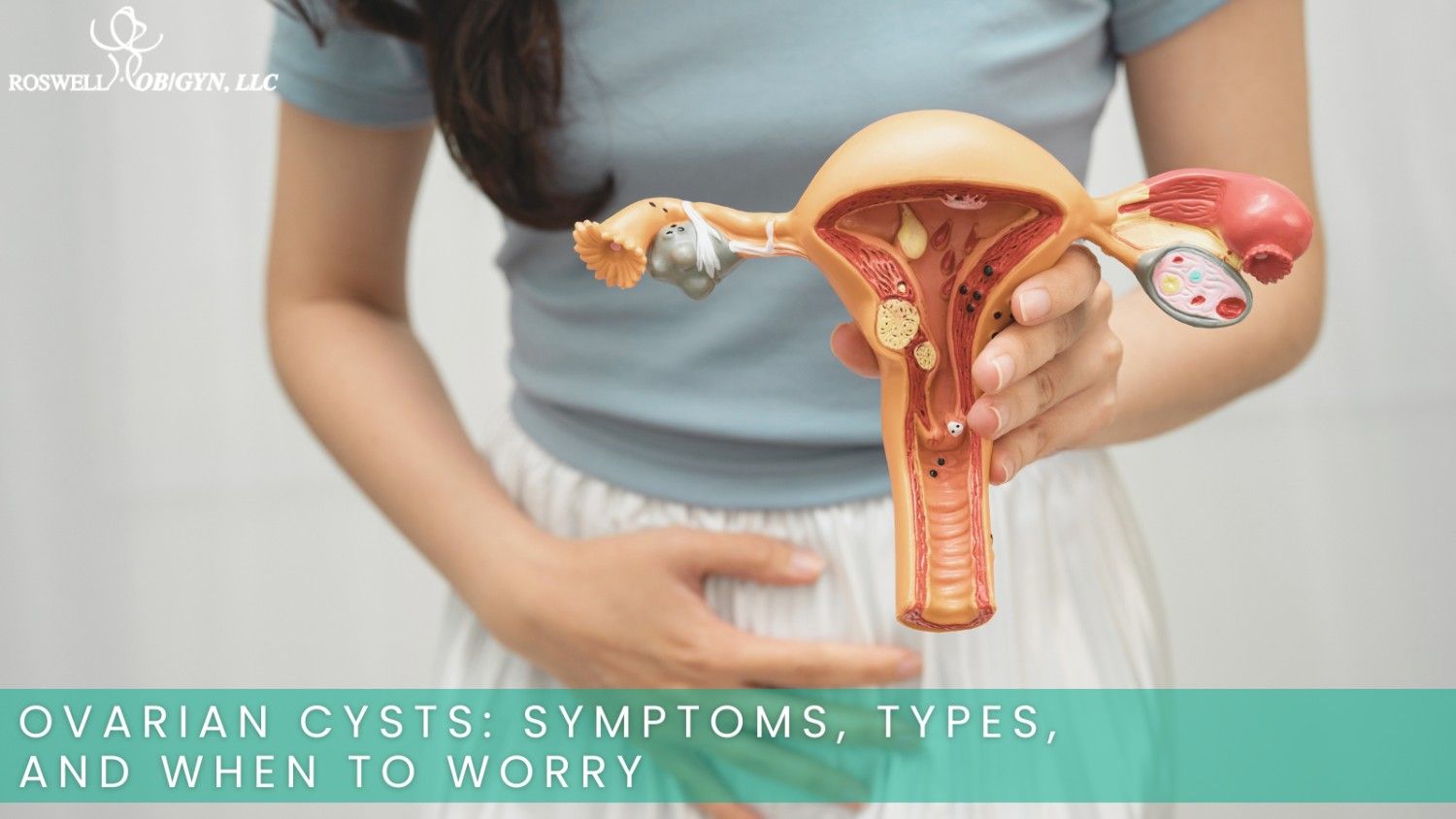
Ovarian cysts are fluid-filled sacs that develop on or inside the ovaries, and most are harmless. Roughly 7% of women worldwide develop an ovarian cyst at some point during their lives, with many never realizing one is present. These growths often form as a normal part of ovulation and disappear within a few menstrual cycles without any medical treatment.
Still, some ovarian cysts grow large enough to cause pelvic discomfort, bloating or changes in your menstrual cycle. Knowing the difference between a cyst that resolves on its own and one that needs medical attention helps you take the right steps at the right time. Your OBGYN can identify and manage ovarian cysts through routine gynecological care, giving you a clear picture of what is happening and what comes next.
What Are Ovarian Cysts?
Ovarian cysts develop when fluid collects inside a thin membrane on the surface of or within an ovary. The ovaries are two small, almond-shaped organs located on each side of the uterus. Each month during the reproductive years, one ovary releases an egg from a structure called a follicle. Cysts can form when that follicle does not open to release the egg or when it closes back up after ovulation and fills with fluid.
Most ovarian cysts fall into the functional category, meaning they develop as part of the normal menstrual cycle. These cysts are almost always benign and tend to shrink on their own within six to eight weeks. Pathological cysts, on the other hand, grow independently of ovulation and may contain tissue types like hair, skin cells or mucus-producing cells. An OBGYN can distinguish between these categories using a pelvic exam paired with imaging.
What Are the Different Types of Ovarian Cysts?
Ovarian cysts fall into two broad groups: functional cysts tied to the menstrual cycle and pathological cysts that form independently. Each type behaves differently and carries its own set of considerations for monitoring and treatment.
| Cyst Type | Description | Common In | Typically Resolves on Its Own? |
| Follicular cyst | Forms when a follicle does not release an egg and continues to grow | Premenopausal women | Yes, often within 1-2 cycles |
| Corpus luteum cyst | Develops after ovulation when the follicle seals off and fills with fluid | Premenopausal women | Yes, often within a few weeks |
| Dermoid cyst (teratoma) | Contains tissue like skin, hair and fat cells that may be present from birth | Women of reproductive age | No, may require surgical removal |
| Cystadenoma | Grows on the outer surface of the ovary and can become quite large | Premenopausal and postmenopausal women | No, often needs monitoring or removal |
| Endometrioma | Forms from endometriosis tissue that attaches to the ovary | Women with endometriosis | No, typically requires treatment |
| Hemorrhagic cyst | A functional cyst that bleeds into itself | Premenopausal women | Yes, usually resolves within weeks |
Functional Cysts
Follicular cysts and corpus luteum cysts make up the vast majority of ovarian cysts that OBGYNs see in clinical practice. A follicular cyst forms when the egg-containing follicle does not rupture during ovulation and instead continues filling with fluid. A corpus luteum cyst develops after ovulation when the empty follicle reseals and accumulates fluid or blood inside.
Both types rarely grow beyond a few centimeters and often disappear without intervention. Your OBGYN may recommend a follow-up ultrasound in six to eight weeks to confirm the cyst has resolved. Functional cysts are not associated with ovarian cancer and do not typically affect long-term reproductive health.
Pathological Cysts
Pathological cysts grow independently from the ovulation process and include dermoid cysts (teratomas), cystadenomas and endometriomas. Dermoid cysts contain a mix of tissue types, including skin, hair and even teeth, because they develop from embryonic cells. Cystadenomas form on the outer surface of the ovary and may be filled with a watery or mucus-like substance.
Endometriomas, often called “chocolate cysts,” develop when endometriosis tissue grows on the ovary and creates a cyst filled with old blood. Pathological cysts do not resolve on their own the way functional cysts do. Your OBGYN will monitor their size and characteristics through imaging and recommend treatment if the cyst grows, causes pain or shows features that need further evaluation.
What Symptoms Do Ovarian Cysts Cause?
Many ovarian cysts produce no symptoms at all. OBGYNs frequently discover them during a routine pelvic exam or an imaging study performed for an unrelated reason. When symptoms do appear, they tend to develop gradually as the cyst increases in size or presses against nearby structures.
Common ovarian cyst symptoms include:
- A dull or sharp ache on one side of the lower abdomen or pelvis
- A sensation of fullness, pressure or heaviness in the pelvic area
- Bloating that feels persistent and difficult to explain
- Pain during intimacy
- Menstrual irregularities, including heavier or lighter periods than usual
- A frequent need to urinate when the cyst presses on the bladder
Pelvic discomfort from an ovarian cyst can sometimes overlap with symptoms of other gynecological conditions like endometriosis, fibroids or urinary tract infections. Tracking the timing, location and intensity of your symptoms helps your OBGYN narrow down the cause more quickly.
When Should You Worry About an Ovarian Cyst?
Most ovarian cysts are harmless and do not require emergency care. Certain symptoms, though, signal that a cyst may have ruptured or twisted the ovary, and both situations call for prompt medical attention.
Emergency Warning Signs
Ovarian torsion occurs when a cyst causes the ovary to rotate on its supporting ligaments, cutting off blood flow. A ruptured cyst happens when the cyst wall breaks open and releases fluid or blood into the pelvic cavity. Both conditions cause sudden, intense pain that sets them apart from the gradual discomfort of a growing cyst.
Seek emergency care if you experience sudden and severe pelvic or abdominal pain, pain accompanied by fever or vomiting, dizziness or faintness along with rapid breathing, or cold and clammy skin. These symptoms can develop quickly and may indicate internal bleeding or compromised blood flow to the ovary.
Signs That Need an OBGYN Visit
Schedule an appointment with your OBGYN if you notice persistent pelvic pain that lasts beyond two or three menstrual cycles, bloating that does not improve over several weeks or noticeable changes in your period pattern. Postmenopausal women who are found to have an ovarian cyst should receive follow-up evaluation, since the risk of malignancy increases with age. Your OBGYN may order a CA-125 blood test alongside ultrasound imaging to determine if additional workup is needed. Learning the early signs of ovarian cancer and the differences between benign cysts and concerning masses gives you a clearer understanding of your results.
How Are Ovarian Cysts Diagnosed and Treated?
Identifying an ovarian cyst and choosing the right management approach depends on the type, size and characteristics of the growth, along with your age and symptoms.
Diagnosis
Your OBGYN often starts with a pelvic exam, where they may feel an enlarged ovary or detect tenderness on one side. Transvaginal ultrasound imaging is the primary tool for evaluating ovarian cysts because it shows if the cyst is fluid-filled (simple), solid or a combination of both (complex). Doppler ultrasound can assess blood flow patterns around the cyst, which helps rule out torsion.
Your OBGYN may also order a CA-125 blood test if you are postmenopausal or if the cyst appears complex on imaging. Elevated CA-125 levels alongside suspicious imaging findings may prompt referral to a gynecologic oncologist for further evaluation. MRI is sometimes used when ultrasound results are unclear and your OBGYN needs more detailed images.
Treatment Options
Watchful waiting is the most common approach for small, simple, functional cysts that are not causing symptoms. Your OBGYN will schedule a follow-up ultrasound in eight to twelve weeks to confirm the cyst has resolved. Hormonal birth control, such as oral contraceptives, can help prevent new functional cysts from forming by suppressing ovulation, though it does not shrink existing cysts.
Surgery becomes an option when a cyst is large, persistent, growing, causing significant pain or showing features suspicious for malignancy. A cystectomy removes the cyst while preserving the ovary, making it the preferred approach for women who want to maintain fertility. An oophorectomy, which removes the entire ovary, may be recommended when the cyst has damaged the ovarian tissue or when cancer is a concern. Minimally invasive laparoscopic surgery is the standard approach for benign cysts and involves smaller incisions, less postoperative pain and a faster recovery compared to open surgery.
Can Ovarian Cysts Affect Fertility?

Most ovarian cysts do not interfere with your ability to become pregnant. Functional cysts form as part of normal ovulation and typically resolve before they affect reproductive function. Many women conceive without difficulty even with a small cyst present on one ovary.
Certain types of cysts do carry a greater impact on fertility. Endometriomas can damage ovarian tissue over time, reduce the number of available eggs and create adhesions that block the fallopian tubes. Women with PCOS develop multiple small cysts on the ovaries linked to hormonal imbalances that disrupt regular ovulation. Both conditions benefit from early diagnosis and a treatment plan designed around your reproductive goals.
When surgical removal of a cyst is necessary, OBGYNs prioritize fertility-preserving techniques. A cystectomy removes the cyst while keeping the ovary intact, protecting your egg supply. Discussing your family planning goals with your OBGYN before any procedure helps guide the surgical approach and follow-up care.
Ovarian Cyst Care in Alpharetta, Atlanta, Canton and Cumming
The team at Roswell Ob/Gyn, LLC provides in-office ultrasound and complete gynecological evaluation for women experiencing pelvic pain, bloating or other symptoms of ovarian cysts. From initial imaging and diagnosis through ongoing monitoring or surgical treatment, the OBGYNs at Roswell Ob/Gyn, LLC work with you to build a care plan that fits your health needs and goals.
Roswell Ob/Gyn, LLC has offices in Alpharetta, Atlanta, Canton and Cumming, making it convenient to access expert gynecological care close to home. Schedule an appointment today to discuss your symptoms and get the answers you need.
Frequently Asked Questions
Can stress or diet influence ovarian cyst development?
Chronic stress and poor nutrition can disrupt hormonal balance, which may affect how your ovaries function during each menstrual cycle. Elevated cortisol levels tied to prolonged stress can interfere with the hormonal signals that regulate ovulation. Maintaining a balanced diet rich in whole grains, lean proteins, fruits and vegetables supports stable hormone levels. While no specific food or supplement prevents cysts from forming, consistent healthy habits support overall reproductive health.
Should you avoid exercise if you have an ovarian cyst?
Light to moderate exercise is safe for most women and may help reduce pelvic discomfort associated with smaller cysts. Your OBGYN may recommend avoiding high-impact activities, heavy lifting, or intense abdominal exercises if you have a large cyst, since sudden jarring movements increase the risk of torsion or rupture. Walking, swimming and gentle yoga are usually well-tolerated options. Always check with your OBGYN about activity modifications based on your cyst’s size and location.
Can ovarian cysts cause weight gain or bloating that won’t go away?
Large ovarian cysts can cause noticeable abdominal bloating and a feeling of fullness that mimics weight gain. The bloating comes from the physical space the cyst occupies in the pelvic cavity, along with possible fluid accumulation. Persistent bloating that does not respond to dietary changes or lasts beyond a few weeks warrants an evaluation from your OBGYN. Imaging can reveal if a cyst or another gynecological condition is contributing to the symptom.
How often should you get follow-up ultrasounds for a known cyst?
Your OBGYN will typically schedule a repeat ultrasound eight to twelve weeks after the initial detection of a functional cyst. If the cyst has resolved, no further imaging is usually needed. Cysts that persist, grow or change in appearance may require ultrasounds every three to six months depending on their characteristics. Postmenopausal women with persistent cysts often need more frequent monitoring and possible blood work.
Are ovarian cysts common during pregnancy?
Ovarian cysts are relatively common in early pregnancy, with corpus luteum cysts developing naturally to support the pregnancy during the first trimester. These cysts produce progesterone that helps sustain the uterine lining until the placenta takes over around weeks ten to twelve. Most pregnancy-related cysts resolve on their own during the second trimester without any intervention. Large or persistent cysts during pregnancy are monitored closely, and surgical removal is considered only when the cyst poses a risk of torsion, rupture or obstruction during delivery.