
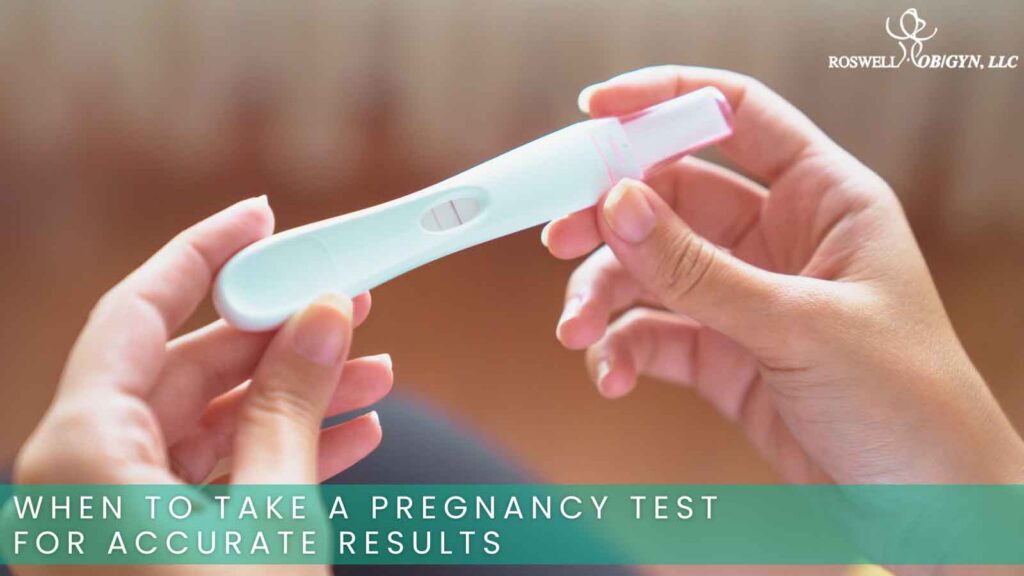
A negative pregnancy test doesn’t always mean you’re not pregnant. Testing at the wrong time is the most common reason for inaccurate results, and knowing exactly when to test can save you confusion and unnecessary stress. For the most reliable reading, take a pregnancy test on the first day of your missed period using first morning urine. This guide covers the science behind test timing, how irregular periods affect your testing window, and when to contact your OBGYN for professional confirmation.
How Home Pregnancy Tests Detect Pregnancy
Home pregnancy tests measure human chorionic gonadotropin (hCG), a hormone your body produces after a fertilized egg implants in the uterine lining. Implantation typically occurs six to twelve days after ovulation, and hCG levels rise rapidly in the days that follow.
Most home tests can detect hCG levels starting around 20-25 mIU/mL, though sensitivity varies by brand. Understanding this detection threshold helps explain why testing too early often produces inaccurate results. Your OBGYN clinic can provide blood tests that detect even lower hCG levels when early confirmation is needed.
Best Timing for Accurate Pregnancy Test Results
The timing of your test has a significant impact on accuracy. Testing at the optimal time reduces the likelihood of misleading results and unnecessary anxiety.
Testing After a Missed Period
The most reliable time to take a home pregnancy test is after you miss your expected period. By this point, hCG levels in most pregnancies have risen high enough for standard tests to detect. Testing on the first day of your missed period yields approximately 99% accuracy with most brands.
For women with regular 28-day cycles, this means testing about 14 days after ovulation. Your body needs adequate time to produce detectable hCG levels, and waiting until your missed period provides that window.
Early Testing Before Your Expected Period
Some tests marketed as “early detection” claim to provide results up to six days before your missed period. While these tests use more sensitive technology, accuracy rates drop significantly with early testing.
| Days Before Missed Period | Approximate Accuracy |
| 6 days before | 56% |
| 5 days before | 74% |
| 4 days before | 84% |
| 3 days before | 92% |
| 2 days before | 97% |
| 1 day before | 98% |
| Day of missed period | 99% |
Early negative results should always be confirmed with a follow-up test after your missed period. If you receive a negative result but still suspect pregnancy, schedule an appointment at your OBGYN clinic for blood testing.
First Morning Urine Provides Best Results
Testing with your first morning urine produces the most accurate results because hCG concentration is highest after several hours without urination. Drinking large amounts of fluid before testing dilutes your urine and may cause a false negative, particularly in early pregnancy when hCG levels are still rising.
If you cannot test in the morning, try to hold your urine for at least four hours before taking the test. This allows hCG to concentrate sufficiently for detection.
ALSO READ: Tracking Ovulation Accurately for Fertility and Cycle Health
How Irregular Cycles Affect Pregnancy Test Timing
Women with irregular periods face unique challenges when timing pregnancy tests. Without a predictable cycle, determining when you actually missed your period becomes difficult. An abnormal menstrual cycle can vary significantly in length, making standard testing advice less applicable.
Calculating Your Testing Window
If you experience menstrual irregularities, tracking ovulation provides more reliable timing information than counting cycle days. Ovulation predictor kits, basal body temperature charting, or cervical mucus monitoring can help identify when ovulation occurred.
Once you confirm ovulation, wait at least 14 days before testing. This approach works better than guessing based on an unpredictable cycle length. Women with an abnormal menstrual cycle may benefit from discussing testing strategies with their provider, as cycle length variations affect the optimal testing window.
When Cycle Irregularities Require Professional Guidance
Persistent menstrual problems sometimes indicate underlying conditions that affect both fertility and pregnancy test timing. Polycystic ovary syndrome (PCOS), thyroid disorders, and hormonal imbalances can cause menstrual irregularities that complicate your ability to know when testing will be accurate.
If you experience chronic irregular periods and are trying to conceive, OBGYN specialists can help you understand your cycle patterns and recommend personalized testing strategies. Your provider may suggest blood tests to confirm pregnancy earlier than home tests allow. Addressing the root cause of irregular periods also supports your overall reproductive health.
ALSO READ: Genetic Counseling Before Pregnancy: Is It Right for You?
Factors That Can Affect Test Accuracy
Even with perfect timing, other variables can influence your results. Medications, medical history, and testing techniques all play a role in reliability. Recognizing these factors helps you avoid misinterpreting results and know when professional testing provides better answers.
Medications and Fertility Treatments
Certain medications directly affect hCG levels or how tests detect them:
- Fertility medications containing hCG: Trigger shots (such as Ovidrel, Pregnyl, or Novarel) inject hCG directly into your system, causing false positives for up to 14 days after injection. Your fertility specialist can advise when hCG clears your system.
- Medications affecting hormone levels: Some psychiatric medications, anticonvulsants, and hormone therapies may interfere with results. Promethazine and certain tranquilizers fall into this category.
- Diuretics and high fluid intake: These increase urine production and dilute hCG concentration, potentially causing false negatives when hormone levels are still low.
Always inform your OBGYN about current medications when discussing pregnancy testing or fertility concerns. This information helps your provider interpret results accurately.
Medical Conditions Affecting Results
Your medical history can influence both the accuracy and the interpretation of pregnancy tests:
- Recent pregnancy loss: hCG may remain detectable for four to six weeks after miscarriage, ectopic pregnancy, or abortion. Testing during this window can produce a positive result reflecting the previous pregnancy rather than a new one.
- Ectopic pregnancy: When a fertilized egg implants outside the uterus, hCG levels often rise more slowly than normal. This can produce faint positives or delayed positive readings and requires prompt medical attention.
- Gestational trophoblastic disease: Rare conditions like molar pregnancy produce unusually high hCG levels that affect test accuracy and require medical monitoring.
- Ovarian cysts and certain tumors: Some ovarian conditions produce hCG independently of pregnancy, causing false positives.
If you have concerns about how your medical history might affect results, discuss these with OBGYN specialists before testing.
Test Quality and User Error
Home pregnancy tests are highly accurate when used correctly, but common mistakes can compromise results:
- Expired or improperly stored tests: Heat, humidity, and age degrade the chemical reagents that detect hCG. Always check expiration dates.
- Not following instructions precisely: Each brand has specific requirements for urine contact time and result reading windows. Deviating affects reliability.
- Reading results outside the time window: Most tests require reading results between two and ten minutes. Reading too early may miss a developing line, while reading too late can show evaporation lines mistaken for faint positives.
- Using diluted urine: Testing after drinking large amounts of fluid reduces hCG concentration. First morning urine provides the most reliable sample.
When in doubt, your OBGYN clinic can provide blood testing that eliminates user error variables.
Understanding Your Pregnancy Test Results

Interpreting pregnancy test results correctly prevents confusion and helps you determine the appropriate next steps.
What a Positive Result Means
A positive pregnancy test indicates hCG was detected in your urine. False positives are rare but can occur due to recent pregnancy loss, fertility medications, or certain medical conditions. Any positive result warrants confirmation and follow-up with your OBGYN.
After receiving a positive home test, schedule an appointment to confirm the pregnancy through blood testing and an early ultrasound. Your provider will also calculate your estimated due date and begin discussing prenatal care.
What a Negative Result Means
A negative result means hCG was not detected at levels high enough for the test to register. This could indicate you are not pregnant, or it could mean you tested too early. The timing of testing significantly influences negative results, particularly for women testing before their expected period.
If your period does not arrive within a week of a negative test, retest or contact your OBGYN clinic for evaluation. Persistent menstrual problems without pregnancy may indicate other health concerns worth investigating with your provider.
Faint Lines and Unclear Results
A faint positive line still indicates pregnancy, as any amount of hCG produces a visible line. However, very faint lines may indicate early pregnancy with still-rising hCG levels, or they could result from an evaporation line if read after the specified time window.
When results appear unclear, wait two to three days and retest with the first morning urine. hCG levels double approximately every 48-72 hours in early pregnancy, so a follow-up test should show a darker line if pregnancy is progressing normally.
ALSO READ: How Fertility Changes with Age: Facts Every Woman Should Know
When to See Your OBGYN for Pregnancy Confirmation
While home tests provide convenient initial screening, professional confirmation offers important benefits for your prenatal care journey.
Scheduling Your First Prenatal Appointment
After a positive home test, contact your OBGYN to schedule your first prenatal appointment. Most practices schedule this visit between six and eight weeks of pregnancy, counting by the first day of your last menstrual period.
During this appointment, your provider will:
- Confirm pregnancy through examination or blood testing
- Perform an early ultrasound to verify the pregnancy location and estimate gestational age
- Review your medical history and current medications
- Discuss prenatal vitamins and early pregnancy guidelines
- Calculate your estimated due date
- Answer your questions about pregnancy and delivery
Situations Requiring Earlier Evaluation
Contact your OBGYN clinic promptly if you experience:
- Severe abdominal or pelvic pain
- Heavy vaginal bleeding
- History of ectopic pregnancy
- History of recurrent pregnancy loss
- Significant abnormal menstrual cycle patterns before the positive test
- Medical conditions requiring close monitoring during pregnancy
Early evaluation helps ensure appropriate monitoring and care for both routine and high-risk pregnancies.
Comprehensive OBGYN Care at Roswell Ob/Gyn, LLC
Accurate pregnancy testing marks the beginning of an important health journey. Your OBGYN serves as your partner through confirmation, prenatal care, and delivery, providing guidance and support at every stage.
At Roswell Ob/Gyn, LLC, our team provides comprehensive OBGYN care for women planning pregnancy, confirming pregnancy, and preparing for the months ahead. We offer in-office blood testing for early pregnancy confirmation, advanced ultrasound services, and personalized prenatal care at convenient locations in Alpharetta, Atlanta, Canton, and Cumming, GA.
Our OBGYN specialists understand that waiting for test results can feel stressful. We provide timely appointments and clear communication to help you move forward with confidence. For women experiencing menstrual irregularities that complicate cycle tracking, our providers can recommend strategies to better understand your fertility window. Schedule an appointment with our experienced providers to discuss pregnancy confirmation, prenatal care, or any reproductive health concerns. Our caring team is ready to support you through every step of your journey.